
Breadcrumbs
These links will help you get back to where you want to go faster.
Air Duct Cleaning Scams in Phoenix: How to Spot Fake Reviews, Avoid Low-Price Traps, and Choose a Company You Can Trust
Hiring a reputable air duct cleaning company can be challenging, especially when deceptive marketing tactics and fake online reviews cloud your judgment. For homeowners in Phoenix and the surrounding areas, understanding how to identify trustworthy services, avoid common industry scams, and make informed decisions is essential to protecting your home and investment.
In this comprehensive guide, we demystify the air duct cleaning process, expose prevalent scams, and provide expert advice supported by data from the U.S. Environmental Protection Agency (EPA), the National Air Duct Cleaners Association (NADCA), and consumer protection agencies. Whether you’re evaluating providers or considering your first cleaning, this article equips you with the knowledge you need to choose wisely.
NADCA Certified residential air duct cleaning and commercial air duct cleaning technicians can tackle some of the toughest jobs. Are you looking for an air duct cleaner near you in the Major Metropolitan Phoenix area? Call 602-613-0640 or schedule an appointment online.
What you will learn in this article:
– Hiring a reputable air duct cleaning company in Phoenix can be difficult due to deceptive marketing and fake reviews.
– Research shows duct cleaning removes contaminants inside ducts and can improve indoor air quality; benefits mostly apply when addressing specific problems.
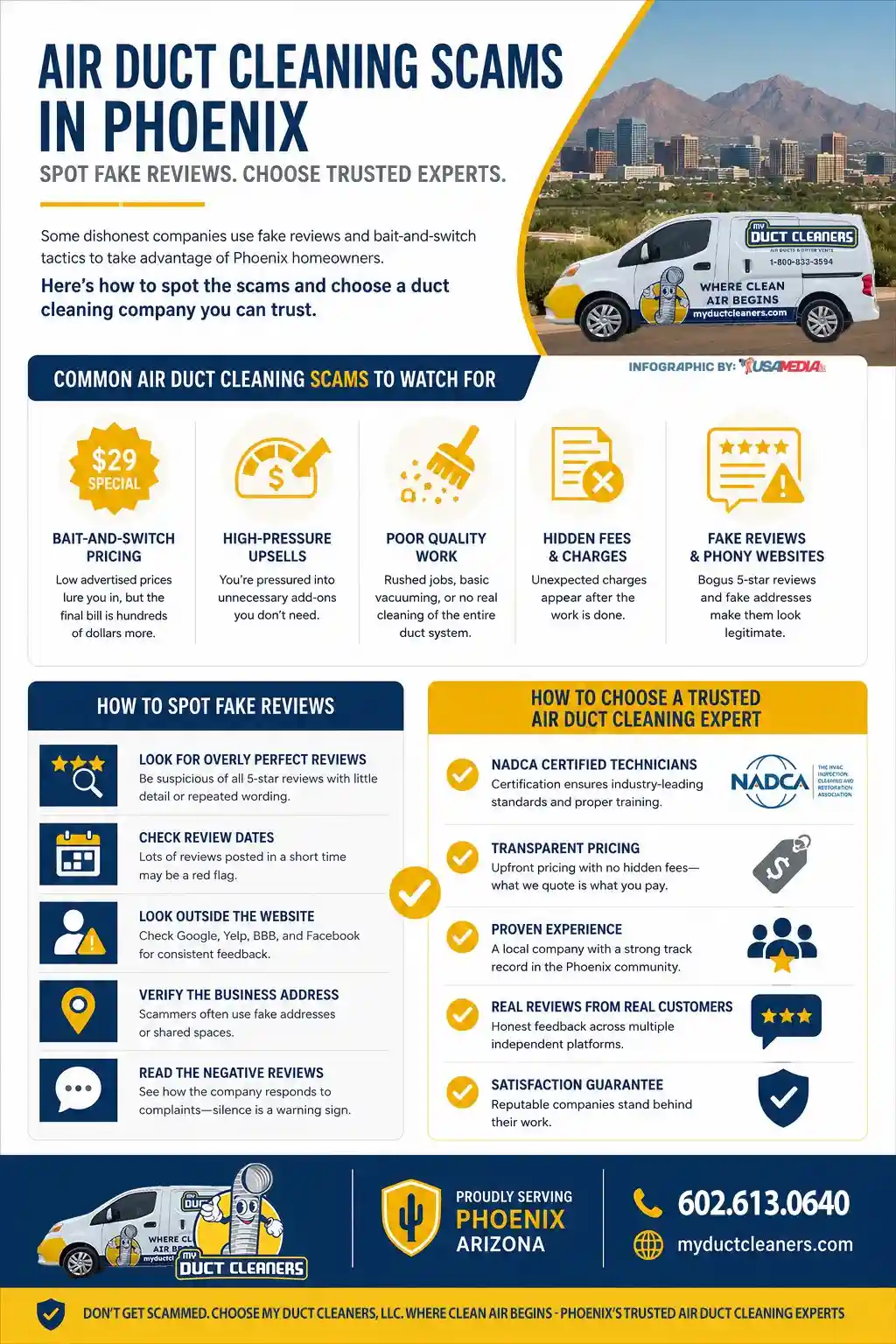
– Beware of low-price bait-and-switch scams advertising cleaning for under $150, which often lead to costly add-ons.
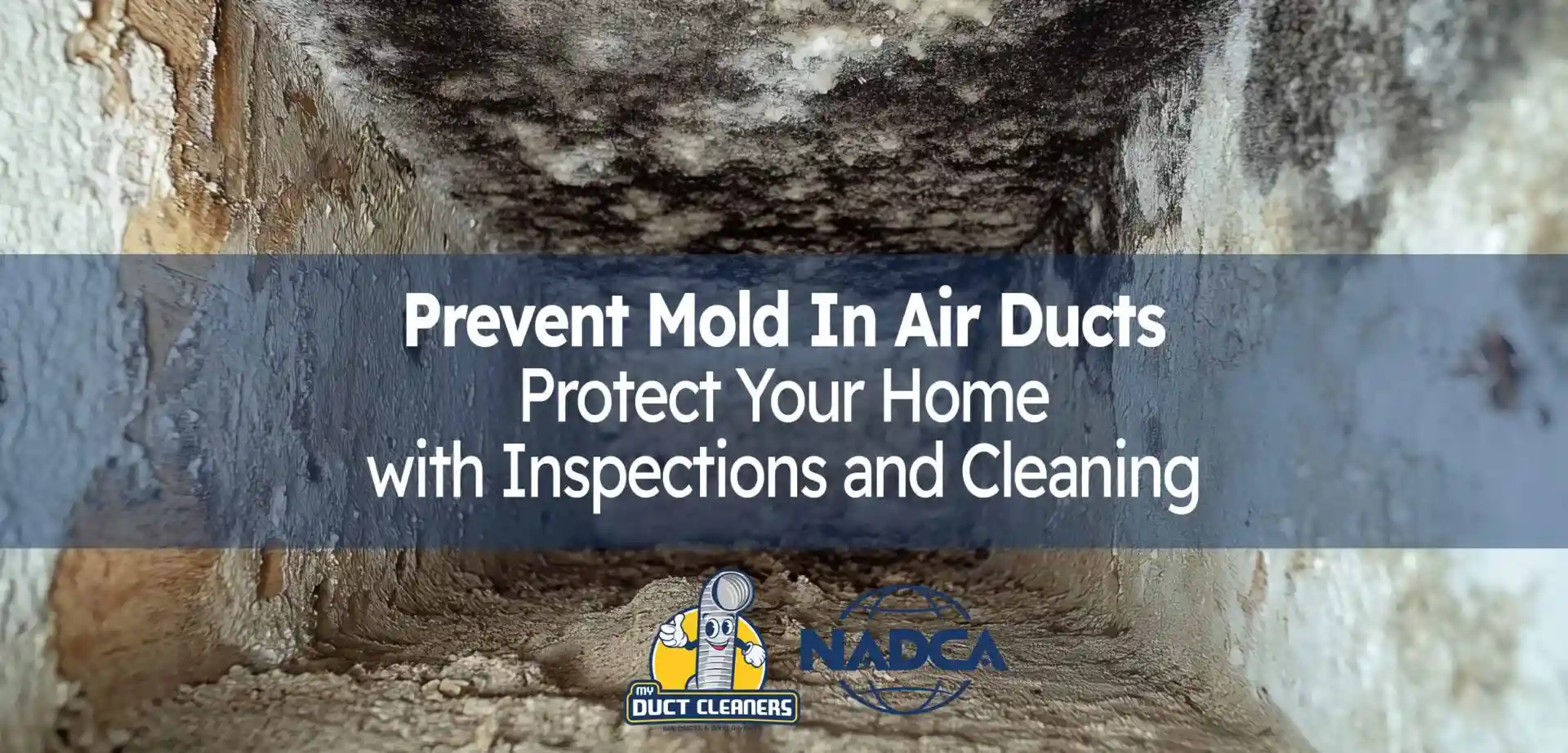
– Signs of scams include vague offers, high-pressure sales tactics, hidden fees, and technicians pushing immediate expensive treatments.
– Fake online reviews are common; signs include repetitive wording, overly positive ratings, vague comments, and a sudden influx of reviews.
– Trustworthy companies provide clear, itemized pricing, use specialized HEPA-filter equipment, offer thorough inspections, document before-and-after results, and employ certified technicians.
– Ask critical questions about certifications, services included, pricing transparency, equipment used, cleaning duration, documentation, and technician qualifications.
– Report suspected scams to the FTC, Arizona Attorney General, BBB, Arizona Registrar of Contractors, or your credit card issuer.
Understanding Air Duct Cleaning: What You Need to Know
When Is Air Duct Cleaning Necessary?
According to the EPA, air duct cleaning is a practical measure since air ducts get dirty over time. Although regular cleaning has not been proven to prevent health problems conclusively, the EPA states that it helps prevent contaminated air ducts from spreading pollutants throughout the home. Duct cleaning hasn’t been proven to prevent health issues or significantly decrease particle levels, as dirt mostly sticks to ducts and rarely enters living spaces. It’s important to keep in mind that dirty ducts are just one of many particle sources. The EPA recommends educating yourself and consulting reliable sources for information on these issues.
That said, there are specific conditions under which duct cleaning is recommended, especially to maintain HVAC efficiency and indoor air quality:
- Visible Mold Growth: Mold growing on hard surfaces inside ducts or HVAC components requires prompt and professional cleaning and remediation.
- Infestations: If rodents or insects have penetrated the duct system, professional removal and cleaning are necessary to protect health.
- Excessive Dust and Debris: Following major renovation or remodeling that generates heavy debris inside the system, cleaning can improve airflow and system function.
For typical homes with no visible contamination or infestation, the EPA recommends focusing on regular filter changes and general HVAC maintenance rather than routine duct cleaning.
It’s also important to note that dirty air ducts are a legitimate fire hazard when conditions allow combustible materials to accumulate over time. Dust, lint, pet hair, and fine particulate matter that build up inside ductwork and around HVAC components are all classified as combustible organic materials. Fire science research and safety standards, including guidance from the National Fire Protection Association (NFPA), recognize that accumulated debris in ventilation systems can act as a fuel source that contributes to ignition and fire propagation under the right conditions.
If these materials are exposed to an ignition source—such as an electrical fault, overheating motor, or extreme heat generated by a furnace or heat exchanger—they can ignite and allow flames and superheated air to travel rapidly through connected ductwork, potentially spreading fire throughout multiple areas of a home much faster than open-air combustion alone.
What Does Research Reveal About Duct Cleaning Effectiveness?
Scientific studies reveal a nuanced picture about duct cleaning’s actual impact on indoor air quality and health. While ducts accumulate dust and can harbor microbes, controlled research shows that duct cleaning removes contaminants from inside the ducts but does not consistently reduce airborne particles in living spaces. Why is that? Because common indoor activities produce more contaminants than the HVAC system itself. That’s why air duct cleaning is one of the important steps you should take to keep your home as healthy as possible.
Moreover, improperly performed cleaning can even resuspend settled contaminants into the indoor air, temporarily worsening air quality. System efficiency benefits are also context-dependent; however, a 2025 NADCA-sponsored multi-climate study demonstrated that professional cleaning could reduce HVAC fan energy use by 41–60% and improve airflow by 10–46%, positively impacting system performance and energy bills.
Bottom line: duct cleaning provides measurable benefits primarily when addressing specific verified problems rather than as a general health intervention.
Recognizing the Most Common Air Duct Cleaning Scam: The Low-Price Bait-and-Switch
How the Scam Works
Homeowners often encounter advertisements promising whole-house air duct cleaning for shockingly low prices, such as $49 or $69. While these offers seem enticing, consumer protection agencies and NADCA identify them as classic bait-and-switch schemes.
The economics don’t add up: Professional cleaning requires specialized, costly equipment — including truck-mounted HEPA-filtered vacuums costing tens of thousands of dollars — and skilled technicians investing two to four hours per standard home. Hence, legitimate companies cannot sustainably offer thorough cleaning below $400–$700.
NADCA Certified residential air duct cleaning and commercial air duct cleaning technicians can tackle some of the toughest jobs. Are you looking for an air duct cleaner near you in the Major Metropolitan Phoenix area? Call 602-613-0640 or schedule an appointment online.
Warning Signs of a Bait-and-Switch Offer
- Ultra-low advertised prices for whole-house cleaning (typically under $150).
- Vague descriptions such as “whole house” without detail about ducts or components included.
- Technicians who bypass thorough initial inspection and immediately push expensive add-ons.
- High-pressure sales tactics insisting on immediate approval to “lock in” the deal.
- Hidden fees or dramatically increased prices after the service begins.
A trustworthy company provides clear, itemized pricing upfront, patiently answers your questions, and avoids pressuring you into quick decisions.
The Reality Behind Online Reviews: How to Spot Fake Feedback
The Prevalence of Fake Reviews
Online reviews are a crucial part of the decision-making process, but consumers must approach them with caution. Studies reveal that an estimated 14–30% of online reviews across local service industries are fake, incentivized, or manipulated to inflate reputations artificially.
The Federal Trade Commission (FTC) reports that companies generating fraudulent reviews can achieve an astonishing return on investment, incentivizing some to flood platforms with generic five-star ratings created by bots or paid reviewers. The FTC now enforces penalties reaching over $50,000 per fake review violation to combat such abuses.
How to Identify Legitimate Reviews
- Reviews describing specific services performed, equipment used, and before-and-after observations.
- Mention of technician names or detailed interactions.
- Balanced feedback with both positives and constructive criticism.
- Local references to neighborhoods or Phoenix-specific contexts.
- Steady accumulation of reviews over months or years rather than massive clusters in short periods.
Red Flags Signaling Fake Reviews
- Hundreds of five-star reviews posted within a brief window.
- Identical or repetitive wording across multiple reviews.
- Generic, vague comments lacking details (“Great service!” without specifics).
- Reviews focusing heavily on discounts or coupons over workmanship.
- No critical or middling feedback—an unrealistic perfect rating.
A savvy consumer checks Beyond star ratings by exploring the full spectrum of reviews and verifying company credentials through BBB or NADCA directories.
Beware of Fear-Based Sales Tactics
Some unscrupulous technicians exploit health concerns by exaggerating risks, using scare tactics to push immediate, expensive treatments. Claims such as “toxic black mold throughout your ducts” or “dangerous contaminants affecting your family’s health” often lack scientific basis and are designed to provoke urgent decisions under pressure.

Legitimate professionals rely on transparent inspections, evidence like photos or videos, and allow you time to consider findings before authorizing costly services. The EPA and NADCA emphasize that such health claims should be scientifically verifiable and never used to coerce.
If confronted with alarmist diagnoses, seek a second opinion from My Duct Cleaners, LLC. before committing to any remediation.
What to Expect From a Professional Air Duct Cleaning Company
Professional companies conduct careful assessments to ensure that cleaning is necessary and executed according to industry standards. A reputable service should include the following:
- Comprehensive Pre-Cleaning Inspection: An in-depth walkthrough including inspection of supply vents, return ducts, main trunk lines, and the air handler.
- Transparent Pricing: A clear, written estimate detailing all components involved and any potential additional charges.
- Use of Specialized Equipment: Truck-mounted HEPA-filtered vacuum systems, agitation tools, negative air technology (such as covering ducts with special material) or machines, and remote cameras for inspection.
- Documentation: Providing before-and-after photos or videos to verify cleanliness.
- Technician Qualifications: Trained, insured professionals ideally certified by NADCA (e.g., Air Systems Cleaning Specialist, ASCS).
- Ethical Practices: No use of unapproved chemicals or biocides without disclosure, and avoidance of pressure tactics.
- Customer Support: A willingness to answer questions thoroughly and stand behind the work performed.
Key Questions to Ask Before Hiring
| Question | What to Listen For |
|---|---|
| Are you NADCA-certified and do your technicians hold ASCS or CVI credentials? | Yes. Certification shows commitment to best practices and ethical standards. |
| What exactly does your quoted price include? Are main ducts, air handler, and registers covered? | A detailed breakdown with no surprises or vague “whole house” terms. |
| Will there be any additional charges, and if so, will they be disclosed upfront? | Clear communication—no hidden fees added later. |
| How long does the cleaning process take? | Typically 2–4 hours for an average home; longer for complex or heavily contaminated systems. |
| What equipment do you use, and do you follow NADCA guidelines? | Professional HEPA vacuuming and agitation; no ozone generators or unauthorized chemicals. |
| Do you provide before-and-after documentation? | Yes, with photos or video evidence of the work. |
| Are your technicians trained, certified, and insured? | Verification of credentials and insurance demonstrates professionalism and reliability. |
How to Protect Yourself From Scams
Beyond careful company selection, several practical steps help safeguard homeowners:
- Verify licensing with the Arizona Registrar of Contractors and check for complaints.
- Consult Better Business Bureau ratings and read detailed, verified customer feedback.
- Insist on a written contract with transparent pricing and completion timelines.
- Avoid paying the full amount upfront; use deposits and final payments upon satisfactory completion.
- Remain skeptical of health claims promising cures or drastic health improvements without scientific support.
Reporting Fraud and Getting Help
If you suspect you have been victimized by a duct cleaning scam, there are several resources for reporting and seeking redress:
- Federal Trade Commission (FTC): File complaints at reportfraud.ftc.gov.
- Arizona Attorney General Consumer Protection: Submit complaints at azag.gov/complaints/consumer or call (602) 542-5763.
- Better Business Bureau: File at bbb.org.
- Arizona Registrar of Contractors: Report unlicensed contractors and violations at roc.az.gov.
- Credit Card Disputes: Contact your issuer to dispute fraudulent charges related to bait-and-switch or incomplete services.
Why Phoenix Homeowners Trust My Duct Cleaners, LLC

In the demanding Arizona climate, maintaining efficient HVAC systems is crucial for energy savings and indoor comfort. At My Duct Cleaners, LLC, we are ROC licensed, bonded, and insured. We are certified by NADCA and as Dryer Exhaust Technicians. We understand the unique challenges in this field and prioritize honesty, transparency, and adherence to NADCA standards.
Our commitment includes:
- No bait-and-switch pricing; clear, upfront estimates.
- No pressure sales tactics or scare-driven upsells.
- Use of professional-grade equipment and NADCA-certified technicians.
- Thorough inspections with evidence-based recommendations tailored to your system’s actual needs.
Whether addressing remodeling debris, pet dander, or pest intrusion, we aim to empower homeowners with trustworthy service and clear communication.
Make Informed Choices to Protect Your Home and Health
In today’s market, savvy consumers must navigate through misleading ads, fake reviews, and high-pressure sales tactics to find reliable air duct cleaning services. By understanding when duct cleaning is necessary, recognizing prevalent scams, vetting companies with proven credentials like NADCA certification, and asking the right questions, you can avoid costly mistakes and ensure your HVAC system receives quality care.
Remember, legitimate air duct cleaning is an investment in your home’s efficiency and comfort—not a quick fix or complete home health panacea. Use this guide as your foundation, and don’t hesitate to seek second opinions or verification before committing.

For Phoenix-area homeowners seeking transparency, professionalism, and proven expertise, My Duct Cleaners, LLC is ready to provide honest consultations and service that prioritizes your trust. Contact us today for a thorough inspection and clear, competitive pricing tailored to your home’s unique needs.