
Breadcrumbs
These links will help you get back to where you want to go faster.
Is Duct Cleaning the Key to Building Decarbonization?
Expert Insights from My Duct Cleaners, LLC.
As the urgency to reduce carbon emissions intensifies, building decarbonization has become a top priority for property managers and business owners alike, especially in energy-intensive regions like Phoenix, Arizona. While large-scale retrofits such as solar panel installations and equipment upgrades dominate the conversation, an often-overlooked yet highly effective strategy is professional HVAC duct cleaning. Emerging research, including a pivotal multi-climate study from the University of Colorado and the University of Pavia, demonstrates that maintaining clean HVAC ductwork can significantly enhance energy efficiency and reduce carbon footprints.
We will explore how duct cleaning contributes to building decarbonization, particularly in challenging environments like Phoenix, and offer actionable insights for property stakeholders to implement effective maintenance programs.
NADCA Certified residential air duct cleaning and commercial air duct cleaning technicians can tackle some of the toughest jobs. Are you looking for an air duct cleaner near you in the Major Metropolitan Phoenix area? Call 602-613-0640 or schedule an appointment online.
What you will learn in this article:
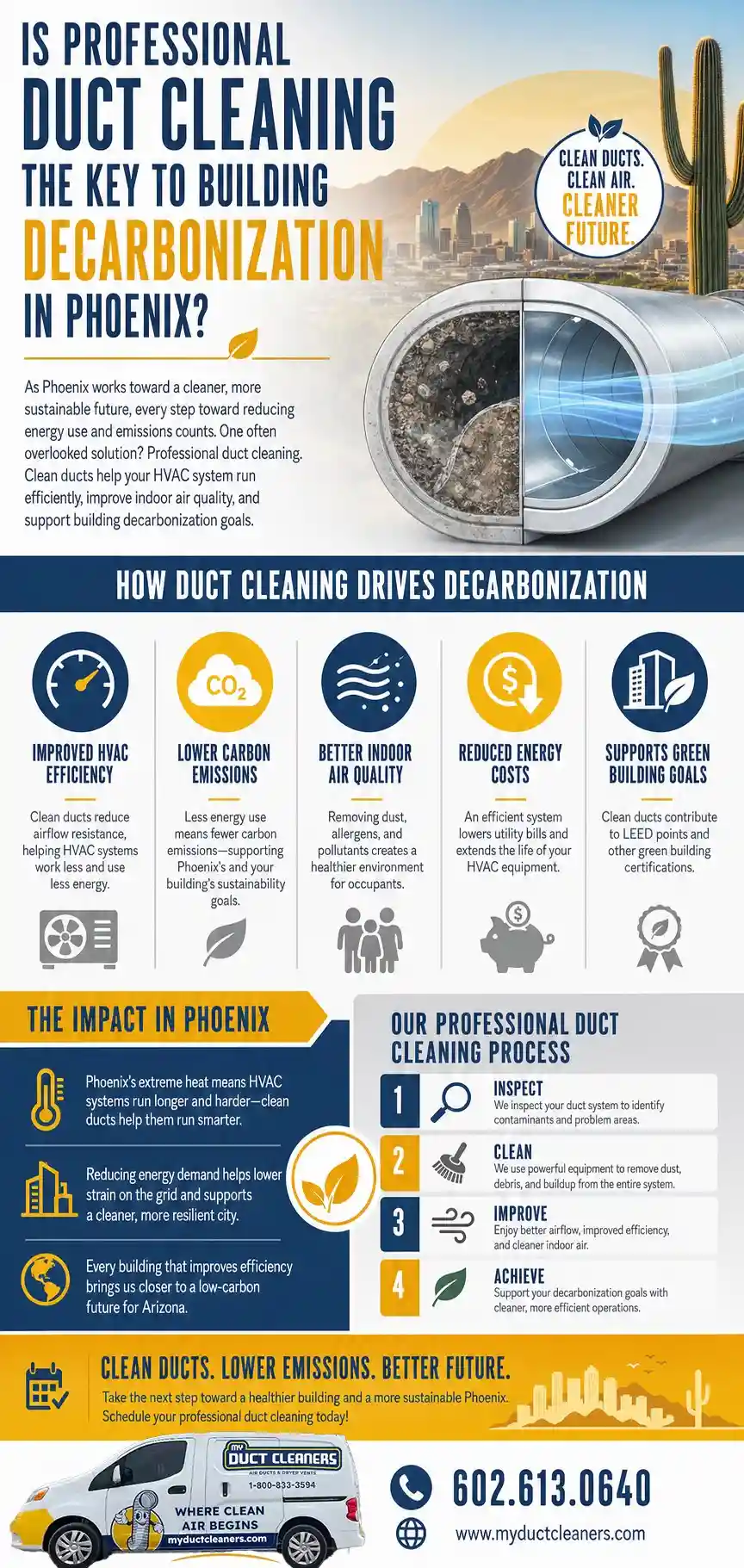
– Building decarbonization is increasingly critical, especially in energy-intensive areas like Phoenix, Arizona, with HVAC duct cleaning emerging as an effective yet often overlooked strategy.
– HVAC systems constitute a significant portion of building energy consumption; dirty ducts cause airflow restrictions leading to higher energy use and increased carbon emissions.

– HVAC fouling involves accumulation of contaminants inside ducts, reducing airflow, heat exchange efficiency, and increasing system runtime and emissions.
– A multi-climate study by the University of Colorado and University of Pavia found professional HVAC cleaning increases airflow by 10-46%, reduces energy consumption, and improves system stability across various regions.
– NADCA sets rigorous standards for HVAC duct cleaning, ensuring thoroughness, safety, and measurable contamination removal to enhance energy efficiency and indoor air quality.
– Benefits of professional duct cleaning include reduced HVAC runtime, lower peak energy demand, decreased greenhouse emissions, extended equipment lifespan, and improved occupant comfort.
– Phoenix’s hot, dusty environment makes regular duct cleaning essential due to dust infiltration and prolonged cooling demands, which stress HVAC systems and the local electric grid.
– Recommended Phoenix maintenance includes comprehensive initial cleaning, regular preventive cleaning (quarterly or semi-annual), frequent filter changes, routine inspections, and detailed documentation for sustainability reporting.
– Duct cleaning offers a strong business case by reducing energy use and operational costs, extending equipment life, minimizing emergency repairs, and supporting carbon credit eligibility and ESG reporting.
– Duct cleaning should be integrated into a holistic decarbonization strategy alongside equipment upgrades, building envelope improvements, renewable energy adoption, energy monitoring, occupant engagement, and controls optimization.
The Role of HVAC Systems in Building Energy Consumption
Understanding Energy Use and Carbon Impact
Buildings are responsible for a significant portion of energy consumption in the United States, with HVAC systems accounting for one of the largest shares of this demand. According to the Environmental Protection Agency (EPA), poorly maintained HVAC systems work harder to compensate for airflow restrictions caused by dirt and debris buildup, subsequently consuming more energy and increasing carbon emissions tied to energy generation.
The process of building decarbonization involves reducing these emissions through various strategies, from equipment upgrades to renewable energy adoption. However, preventive maintenance—specifically professional duct cleaning—remains a cost-effective and impactful yet frequently neglected aspect.
What is HVAC Fouling and Why Does it Matter?
HVAC fouling occurs when contaminants such as dust, pollen, mold spores, and other debris accumulate inside ductwork and air handling components. This buildup restricts airflow, diminishing heat exchange efficiency and forcing HVAC systems to operate longer cycles to maintain comfort levels.
The consequences of fouled duct systems include:
- Restricted airflow, reducing the volume of conditioned air delivered;
- Reduced heat exchange effectiveness, causing inefficient thermal transfer;
- Increased runtime, leading to higher electricity or fuel consumption;
- Elevated carbon emissions due to greater energy use.
Groundbreaking Evidence: The University of Colorado and University of Pavia Study
Study Overview and Methodology
A critical multi-site study published in the Energy and Buildings Journal evaluated how professional HVAC cleaning affects energy consumption and airflow efficiency. Conducted across diverse climates—Italy, Colorado, Mississippi, and Vermont—the research used rigorously controlled methodology, including comparisons between nearly identical air handling units in proximate buildings to isolate variables.
All cleaning procedures adhered to the National Air Duct Cleaners Association (NADCA) standards, encompassing complete cleaning of supply and return ducts, registers, fans, blowers, heat exchangers, and coils.
NADCA Certified residential air duct cleaning and commercial air duct cleaning technicians can tackle some of the toughest jobs. Are you looking for an air duct cleaner near you in the Major Metropolitan Phoenix area? Call 602-613-0640 or schedule an appointment online.
Key Findings and Climate Variations
The study’s results revealed substantial improvements in airflow and energy savings, varying based on system size and duct surface area. Highlights include:
| Location | Supply Airflow Increase | System Cooling Capacity | Impact Summary |
|---|---|---|---|
| Italy | 46% | 30 tons | Largest improvement linked to extensive duct surface area |
| Colorado | 35% | ~20 tons | Significant gains in airflow and efficiency |
| Mississippi | 19% | ~15 tons | Moderate energy savings |
| Vermont | 10% | 10 tons | Smaller systems showed lower but notable improvements |
Across all locations, the cleaning process restored supply airflow by 10% to 46%, reduced net energy consumption, and improved system stability, particularly in systems equipped with Variable Air Volume (VAV) controls. Additionally, coil cleaning enhanced heat exchange efficiency, especially benefiting smaller systems.
NADCA Standards: Benchmarking Quality and Effectiveness in Duct Cleaning
What Are NADCA Standards?
The National Air Duct Cleaners Association (NADCA) defines rigorous industry standards that ensure safe, thorough, and effective HVAC cleaning services. Their Assessment, Cleaning, and Restoration (ACR) protocols mandate comprehensive inspection, use of specialized equipment such as negative pressure systems and air-whips, and post-cleaning verification processes.
Ensuring Quality and Safety
Quality duct cleaning services adhering to NADCA standards cover all critical components—including supply and return ducts, registers, fans, blowers, coils, and air handling units—with strict safety guidelines to protect both technicians and building occupants.
Proper documentation and before-and-after inspections provide transparency and measurable proof of contamination removal, underpinning energy efficiency and indoor air quality improvements.
Benefits of Professional Duct Cleaning for Building Decarbonization
Energy Savings and Emission Reductions
Professional duct cleaning delivers tangible decarbonization benefits by optimizing HVAC performance, reducing energy waste, and lowering carbon emissions. Key impacts include:
- Reduced HVAC runtime from restored airflow;
- Lower peak energy demands during critical periods;
- Decreased greenhouse gas emissions via reduced power usage;
- Extended equipment lifespan by minimizing wear and tear;
- Enhanced system reliability and occupant comfort.
Energy Savings by Building Type
While duct cleaning yields benefits across many building types, the extent varies:
- Large commercial buildings with extensive duct networks enjoy the most significant energy savings;
- Medium-sized buildings improve efficiency and system stability appreciably, especially with VAV controls;
- Small office buildings gain moderate savings, warranting cost-benefit evaluation for cleaning intervals;
- Single-family homes see airflow enhancements but typically realize limited energy return on investment.
Implementing a Successful Duct Cleaning Program in Phoenix
Addressing Phoenix’s Unique HVAC Challenges
Phoenix’s hot, dry desert environment exposes HVAC systems to persistent dust, pollen, and particulate infiltration, compromising air quality and system efficiency. The prolonged cooling season intensifies operational demands, making duct cleanliness essential to managing energy costs and equipment longevity.
Moreover, environmental factors such as haboobs (intense dust storms) and peak electricity demand stress the local grid, amplifying the importance of efficient, well-maintained HVAC systems in regional decarbonization efforts.
Recommended Maintenance Strategies
For Phoenix properties seeking lasting efficiency, a duct cleaning program should include:
- Initial comprehensive cleaning to eliminate years of accumulated debris;
- Regular preventive maintenance—quarterly or semi-annual depending on environment and system use—to sustain performance;
- Frequent HVAC filter changes (monthly in dusty conditions);
- Routine inspections for early contamination detection;
- Meticulous documentation to measure energy savings and maintain compliance for sustainability reporting.
NADCA Certified residential air duct cleaning and commercial air duct cleaning technicians can tackle some of the toughest jobs. Are you looking for an air duct cleaner near you in the Major Metropolitan Phoenix area? Call 602-613-0640 or schedule an appointment online.
The Business Case for Duct Cleaning as a Decarbonization Strategy
Cost-Effectiveness and Return on Investment
Professional duct cleaning is a financially savvy investment, delivering significant operational benefits:
| Benefit | Business Impact |
|---|---|
| Energy Savings | Supply airflow improvements reduce resistance by 10-46%, lowering energy consumption. |
| Operational Efficiency | Shorter HVAC runtimes reduce monthly utility expenses. |
| Equipment Longevity | Less wear extends equipment life, deferring costly replacements. |
| Maintenance Costs | Preventive care minimizes emergency repairs and downtime. |
| Carbon Credits & ESG | Documented decarbonization supports eligibility for incentives and enhances sustainability reporting. |
Energy savings from duct cleaning frequently offset the service costs within the first year, making it an attractive proposition for commercial and institutional properties.
Regulatory Compliance and Incentives
Beyond savings, duct cleaning assists buildings in meeting evolving local and state energy performance standards and environmental disclosure mandates. Clean ductwork supports qualification for utility rebates, ENERGY STAR certification, and strengthens corporate sustainability commitments—integral components for navigating the modern regulatory landscape.
Selecting the Right Professional Duct Cleaning Service in Phoenix
To ensure optimal results, hire a NADCA-certified contractor who adheres to industry best practices and offers transparent documentation.
Critical questions to ask potential service providers include:
- Are you a certified NADCA member following ACR standards?
- What cleaning technologies and methods do you employ?
- Do you provide comprehensive before-and-after system assessments?
- Can you document measurable energy efficiency improvements?
- Do you have expertise with Phoenix’s unique climate challenges?
- Are preventive maintenance programs available?
- Can you supply client references, particularly from commercial properties?
Integrating Duct Cleaning into a Holistic Decarbonization Strategy
While duct cleaning is a powerful tool, it should complement other decarbonization measures to maximize impact. A comprehensive strategy includes:
| Strategy Component | Purpose |
|---|---|
| HVAC Cleaning | Restore airflow and system efficiency |
| Equipment Upgrades | Replace old systems with high-efficiency models |
| Building Envelope Improvements | Minimize heating/cooling losses via insulation and air sealing |
| Renewable Energy | Deploy solar panels, geothermal, or other clean sources |
| Energy Monitoring | Track consumption to identify optimization opportunities |
| Occupant Engagement | Promote energy-efficient usage behaviors |
| Controls Optimization | Program thermostats and VAV systems for peak efficiency |
Elevating Building Decarbonization with Professional Duct Cleaning
The evidence is clear—professional HVAC duct cleaning is a vital yet underutilized component of the building decarbonization toolbox. Through restoring airflow, reducing system runtime, and enhancing overall efficiency, duct cleaning directly lowers energy consumption and carbon emissions.
For Phoenix property managers, business owners, and homeowners, investing in NADCA-certified duct cleaning services represents a cost-effective, measurable way to improve indoor air quality, lower utility costs, and support local and corporate sustainability goals.
By integrating regular duct maintenance into broader energy management plans, organizations can take confident, impactful steps toward greener, healthier buildings—starting with the very air they breathe.
NADCA Certified residential air duct cleaning and commercial air duct cleaning technicians can tackle some of the toughest jobs. Are you looking for an air duct cleaner near you in the Major Metropolitan Phoenix area? Call 602-613-0640 or schedule an appointment online.