
Breadcrumbs
These links will help you get back to where you want to go faster.
Weak Airflow From Vents in Phoenix: Causes, Diagnostics, and Effective Solutions for Your HVAC System
Understanding Weak Airflow and Its Impact
Weak airflow from vents is a common and frustrating issue that significantly affects indoor comfort and energy efficiency. In Phoenix, where scorching heat is a daily reality, homeowners expect their air conditioning systems to deliver a strong, refreshing breeze. When the airflow falters, the consequences extend beyond discomfort—energy bills rise, and HVAC systems strain, increasing the risk of premature failure.
Recognizing weak airflow as a signal of underlying system-wide problems, rather than isolated symptoms, is crucial. Airflow challenges seldom stem from one visible cause; instead, they often arise within a complex chain of components including filters, blowers, coils, ducts, and dampers. Understanding this helps guide effective troubleshooting and targeted repair.
NADCA Certified residential air duct cleaning and commercial air duct cleaning technicians can tackle some of the toughest jobs. Are you looking for an air duct cleaner near you in the Major Metropolitan Phoenix area? Call 602-613-0640 or schedule an appointment online.
What you will learn in this article:
– Weak airflow from vents is a common issue in Phoenix homes that affects comfort, increases energy bills, and strains HVAC systems.
– Causes of weak airflow often involve multiple factors including clogged or improperly rated air filters, blocked supply vents and return grilles, dirty blower wheels, evaporator coils, worn motor componets and cabinet leaks as well as duct issues such as leakage, disconnection, or compression.
– Poor HVAC design, incorrect damper settings, and equipment mismatches can lead to uneven or weak airflow distribution.
– The desert climate in Phoenix exacerbates airflow issues due to fine dust infiltration and extreme attic temperatures, which degrade duct materials and promote leaks.
– Homeowners can perform basic checks: ensuring clean, correctly installed filters; unobstructed vents and grilles; proper thermostat fan settings; and noting whether weak airflow is localized or widespread.
– HVAC cleaning improves airflow mainly when contamination like dust and debris restricts components but does not fix duct leaks or mechanical faults; cleaning must be part of a targeted, condition-based maintenance strategy using NADCA standards.
– Effective solutions include duct repair and sealing, mechanical servicing (blower motor repair, coil cleaning, cabinet sealing), and system design verification with balancing to ensure even airflow and energy efficiency.
– Homeowners should seek professional services from My Duct Cleaners, especially for multi-room issues or suspected duct damage, as we have the tools and safety training required for thorough inspections in harsh Phoenix conditions.
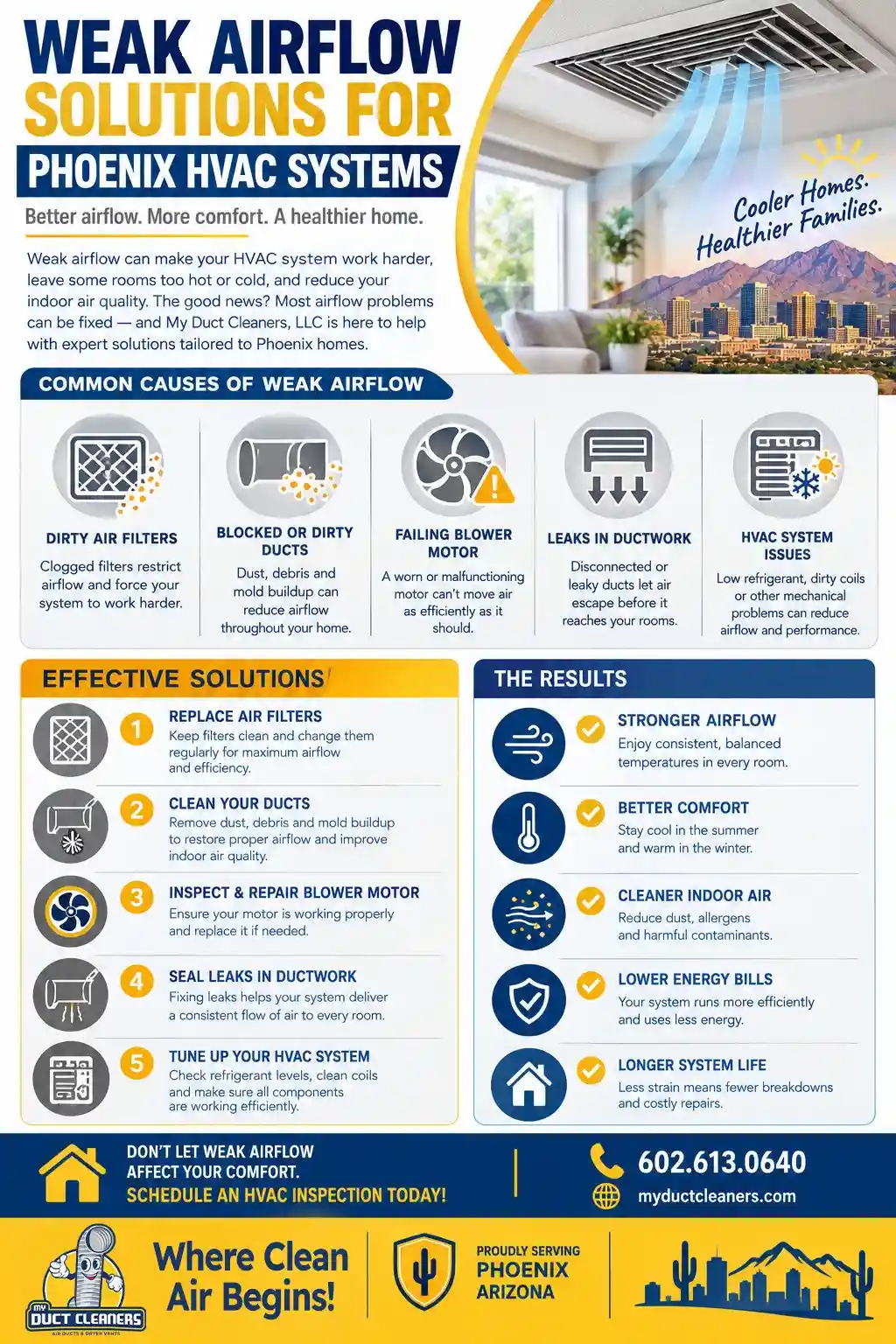
Common Causes of Weak Airflow
Clogged or Restrictive Air Filters
Air filters play a pivotal role in system performance by trapping dust, pet hair, and other debris. When filters are overloaded, clogged, or of an inappropriate MERV rating for the system, they create excessive resistance, impeding airflow. While a visibly dirty filter is an obvious cause, even a seemingly clean filter may be restrictive if it’s not designed for the system’s specifications or if it sits improperly.
Blocked Supply Vents and Return Grilles
Furniture, rugs, curtains, or closed registers can restrict the distribution of conditioned air. Physical obstructions at supply vents or return grilles reduce the volume of air delivered to rooms and disrupt proper system balance, leading to uneven cooling or heating.
Duct Leakage, Disconnection, and Compression
Ductwork condition significantly influences airflow efficiency. In many Phoenix homes, flexible ducts running through attics or crawlspaces are susceptible to heat degradation, sagging, crushing, and disconnected joints. These issues contribute to air escaping before it reaches living spaces, wasting conditioned air and disrupting pressure balance.
Experimental studies have demonstrated that compressed or crushed flexible ducts can increase pressure loss by four to ten times compared to fully extended ducts. Additionally, sharp bends, abrupt transitions, and poor fitting design further raise resistance within the duct network.
Dirty Blower Wheels, Evaporator Coils, and Air Handler Problems
Mechanical components of the HVAC system such as blower wheels and evaporator coils directly impact airflow capacity. Dust and debris accumulation reduces their efficiency, while worn motor bearings, failing capacitors, incorrect fan speed settings, or leaks in the cabinet and air-handler compromise airflow delivery.
Cabinet leakage is not uncommon and can significantly reduce system performance. Research shows furnace and air-handler leakage varies widely but can constitute a substantial airflow loss, especially in older or poorly sealed units.
Improper HVAC Design, Balancing, and Equipment Operation
Uneven or weak airflow can also arise from system design flaws, incorrect damper settings, or equipment mismatches. For instance, undersized ducts, improper zoning, and faulty installation can cause certain rooms to receive inadequate airflow, while others may feel overly conditioned. Additionally, balancing dampers that are closed or partially blocked disrupt even air distribution.
Why Phoenix Homes Face Unique Airflow Challenges
The desert climate presents distinctive factors that strain HVAC systems and ductwork. Fine, pervasive desert dust quickly infiltrates filters and duct interiors, leading to buildup and blockages. Furthermore, attic temperatures routinely exceed 130°F in summer, accelerating the degradation of flexible duct materials and contributing to leaks, sagging, and splits that reduce effective airflow.
These environmental stresses make regular inspection, cleaning, and maintenance especially critical for Phoenix homeowners. Neglecting these factors allows small airflow restrictions or leaks to compound, challenging system performance and driving up operating costs.
Diagnosing Weak Airflow: A Step-by-Step Guide
Safe Homeowner Checks
Before calling a professional, homeowners can screen for simple causes to rule them out. Begin by checking that air filters are clean, properly installed with the arrow pointing toward the HVAC unit, and replaced if visibly dirty. Verify that all supply registers and return grilles are unobstructed by furniture, rugs, or draperies.
Consult your thermostat settings: ensure the fan is set to “Auto” rather than “On,” which can create a perception of weak airflow during non-cooling cycles.
Note the pattern of weak airflow: is it isolated to one room or widespread throughout the home? Single-room issues often indicate localized duct or register problems, while whole-house weakness suggests system-wide restrictions or mechanical faults.
Be alert for additional warning signs: excessive cycling, unusual noises, odors, condensation or water leaks around equipment suggest more urgent mechanical issues requiring professional intervention.
Professional Assessment and Testing
When basic homeowner checks don’t solve the issue, an expert evaluation is essential. NADCA-certified technicians begin with a comprehensive inspection of the air handler, ducts, filters, coils, blower, and cabinet sealing. This involves precise airflow measurements, static pressure testing, and examination of duct integrity.
Leakage testing includes methods such as: localized isolation of duct segments, model-based pressure assessments, and use of specialized tools to detect disconnected or crushed ductwork and unsealed joints. Verified measurements allow pinpointing leak locations and quantifying their impact.
Testing also evaluates blower performance. Speed, power consumption, and pressure data help diagnose motor faults or incorrect settings that reduce airflow volume.
For uneven airflow issues, technicians employ Testing, Adjusting, and Balancing (TAB) methods. This process adjusts dampers based on measured airflow and pressure data to achieve designed air distribution within precise tolerances, improving comfort and efficiency.
NADCA Certified residential air duct cleaning and commercial air duct cleaning technicians can tackle some of the toughest jobs. Are you looking for an air duct cleaner near you in the Major Metropolitan Phoenix area? Call 602-613-0640 or schedule an appointment online.
Understanding the Role of HVAC Cleaning in Restoring Airflow
When Cleaning Makes a Difference
Cleaning can significantly improve airflow when debris buildup restricts components such as filters, coils, or blower wheels. Studies involving commercial and institutional buildings have shown that routine cleaning and maintenance can boost airflow by 10% to 46% and reduce fan energy consumption by up to 60%.
However, duct cleaning alone does not repair leaks, restore crushed ducts, or fix equipment malfunctions. Achieving meaningful airflow improvement depends on accurately identifying that contamination—not repairable mechanical or leakage issues—is the primary restriction.
Limitations and Best Practices
Research underscores that cleaning should be part of a measured, condition-based maintenance strategy rather than a routine cure-all. The best practice involves NADCA-informed procedures, including thorough inspection, documentation, defined cleaning scope targeting accessible components, and post-service verification through measurement.

Cleaning is only justified where visual and measurement evidence confirms that contamination substantially limits airflow or impacts indoor air quality. It should not be used to mask hidden repairs or as a default maintenance step without proper diagnosis.
Effective Solutions: Beyond Cleaning to Repairs and System Optimization
Duct Repair and Sealing
Leaky, disconnected, or crushed ducts require repair or replacement to restore system integrity. Re-sealing duct joints and replacing damaged flexible ducts greatly reduce air loss, enhance pressure balance, and improve energy efficiency.
Mechanical Service and Equipment Maintenance
Blower motor repair or replacement, coil cleaning, and cabinet sealing address key mechanical limitations to airflow. Routine inspection and maintenance of these components protect HVAC investment and prolong system lifespan.
System Design Verification and Balancing
Addressing design issues uncovered through diagnostics—such as improper duct sizing or damper settings—is crucial to achieving even airflow distribution. TAB not only optimizes comfort but can also lead to energy savings by ensuring the system operates within its intended parameters.
When to Call Professionals Like My Duct Cleaners, LLC
Homeowners should seek expert services when preliminary checks do not resolve weak airflow, or when multiple rooms are affected. Suspected duct damage, cabinet leaks, blower issues, or persistent filter loading are clear signs for professional evaluation.
Professionals offer comprehensive diagnostics separating cleaning from repair, sealing, and equipment servicing. NADCA-certified companies such as My Duct Cleaners, LLC follow rigorous standards, use specialized tools, protect the home environment, and provide documented follow-up verifying service effectiveness.
In Phoenix, entering hot and potentially unsafe attics to inspect ducts is not recommended for homeowners. Leave such inspections to trained technicians equipped to handle environmental challenges safely and effectively.
Restoring Efficient Airflow Starts with Accurate Diagnosis
Weak airflow from vents is a diagnostic symptom signaling underlying restrictions, leaks, or mechanical performance issues. Treating the symptom without identifying the root cause risks wasted expenses and continued discomfort.
An effective approach begins with safe homeowner observations, followed by expert assessment using comprehensive measurements and inspection. Cleaning plays a valuable role when contamination restricts airflow, but it must be applied judiciously and alongside repairs and balancing where needed.
By partnering with experienced, NADCA-certified professionals like My Duct Cleaners, LLC, Phoenix homeowners can ensure their HVAC systems deliver optimal airflow, comfort, and efficiency. Timely diagnosis and targeted interventions prolong equipment life, improve indoor air quality, and keep energy costs in check—critical priorities under the desert sun.
Don’t ignore weak airflow. Let it guide you toward the right solution and restore your home’s comfort and performance.